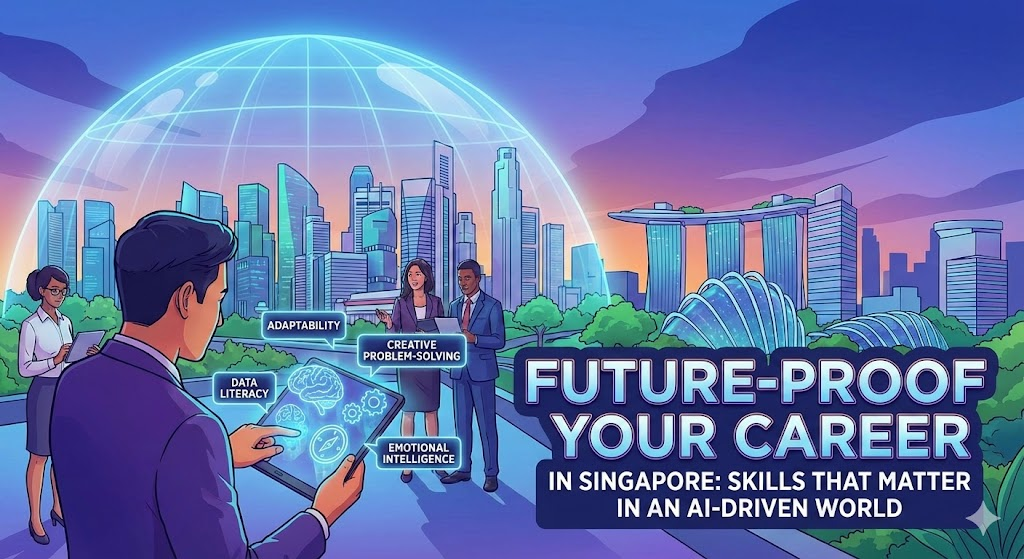
The world of work is changing faster than most of us expected. Digital transformation, automation, and artificial intelligence are reshaping how jobs are done and what employers value. More than ever, career growth depends on one thing: skills.
In Singapore, this shift is not new. With initiatives like SkillsFuture and strong government support for lifelong learning, workers are encouraged to continuously upgrade themselves. Still, many people feel unsure about where to begin. Which skills are worth learning? How much should you focus on AI? And how do you upskill without feeling overwhelmed?
Let’s look at this from a practical, Singapore-focused perspective.
Start with Where You Are
Before signing up for any course, take time to understand your current skill set.
Ask yourself:
- What am I already good at?
- Which parts of my job rely heavily on technology?
- Which tasks could be automated in the near future?
This simple reflection helps you avoid chasing trends blindly. Upskilling works best when it builds on what you already know or helps you move intentionally into a related role.
Digital Literacy Is No Longer Optional
Across industries like finance, logistics, healthcare, and retail, basic digital skills are now expected. Even non-technical roles require comfort with technology.
Useful digital skills include:
- Data handling with spreadsheets
- Collaboration tools like shared documents and dashboards
- Basic understanding of systems, databases, or workflows
- Awareness of cybersecurity risks and best practices
In Singapore, many of these skills can be developed through subsidised SkillsFuture courses or employer-supported training programmes, making them accessible to most workers.
AI Is Already Part of Everyday Work
Artificial intelligence is no longer limited to tech companies. It is embedded in hiring platforms, customer service tools, marketing systems, and internal reporting processes.
This does not mean everyone needs to become an AI engineer. What matters more is learning how to work alongside AI effectively.
That includes:
- Understanding what AI can and cannot do
- Knowing how to use AI tools to save time and improve quality
- Asking better questions and validating outputs
- Adapting workflows that involve AI assistance
For example, a marketer might use AI to generate content ideas but still relies on experience to decide what resonates with customers. A manager might use AI to draft reports while focusing on decision-making and stakeholder communication.
Human Skills Are Becoming More Valuable
As technology takes over routine tasks, human abilities stand out even more.
Skills that continue to be in high demand include:
- Critical thinking and problem-solving
- Clear communication and persuasion
- Creativity and adaptability
- Emotional intelligence and leadership
These skills help people interpret information, manage teams, and build trust. They are difficult to automate and increasingly important in AI-supported workplaces.
Upskilling Opportunities in Singapore
Singapore offers a strong ecosystem for skills development.
SkillsFuture Credit allows Singaporeans aged 25 and above to offset course fees for approved training. It is a low-risk way to explore new skills or deepen existing ones.
Workforce Singapore programmes support mid-career individuals with reskilling pathways, career coaching, and sector-focused training.
Employer-led initiatives are also growing, especially in technology, healthcare, and advanced manufacturing. Many companies now invest directly in employee learning to stay competitive.
The key is to start early, before skills gaps become obstacles.
Make Learning a Habit, Not a One-Off Task
Upskilling is most effective when it becomes part of your routine.
A simple approach:
- Set a monthly learning goal focused on one skill
- Spend a few hours each week learning or practising
- Reflect every few months on how the new skill has helped your work or job prospects
This steady rhythm builds confidence and keeps your career adaptable.
A Final Thought
Singapore’s workforce is well-positioned for the future, supported by strong policy and access to learning resources. At the same time, the global shift towards AI means standing still is no longer an option.
Choose skills with intention. Apply what you learn. Keep learning.
That is how you stay relevant and resilient in a changing job market.
This article is constructed with the help of AI, and may contain error