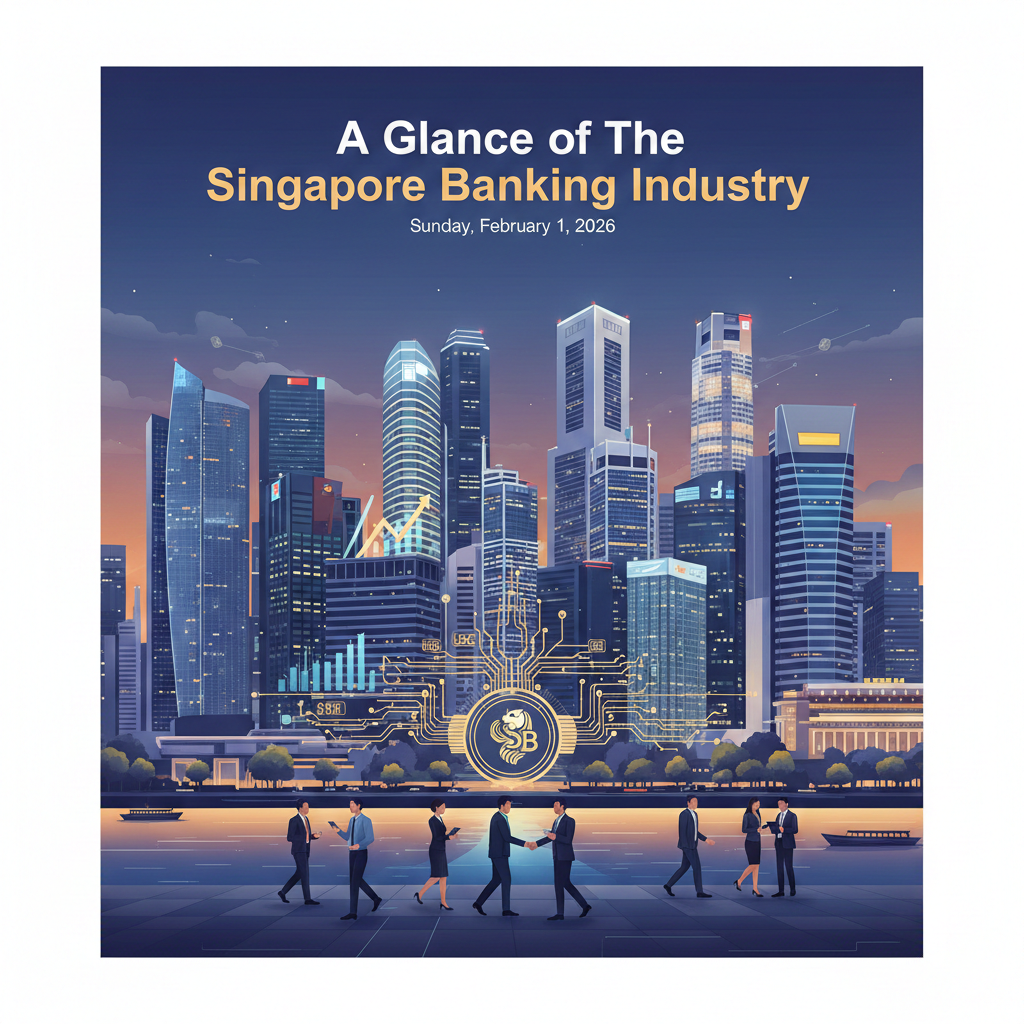
The banking industry in Singapore isn’t just “finance.” It’s a strategic blend of capital markets, digital innovation, risk governance, and international connectivity — all operating under tight regulation and rapid technological change. For job-seekers, career switchers, and professionals already in the sector, understanding both macro forces and everyday working realities will make the difference between stagnation and strategic career growth.
1. Singapore’s Banking Landscape: Stability Meets Innovation
Singapore is one of the world’s leading financial hubs — consistently ranked globally for competitiveness, rule of law, and depth of markets. The banking sector accounts for a significant share (around 14% of GDP) of the economy, showcasing both resilience and growth even amid global headwinds.
But this isn’t a static industry. Regulators and banks are actively reshaping what banking means in practice:
- The Monetary Authority of Singapore (MAS) is deliberately positioning Singapore as a leader in digital finance and fintech integration, issuing licences for digital banks, open banking frameworks, and innovation sandboxes to fuel competition and innovation.
- The digital transformation agenda also embraces sustainable finance, cross-border payments, and embedded finance — expanding banking beyond “tellers and traders.”
For professionals, that means the sector is not just about finance anymore — it’s about technology, compliance, customer experience, and strategic positioning.
2. Digital Banking & FinTech: Transforming the Core
Traditional banking roles are evolving quickly. Key trends reshaping the sector include:
📌 Digital Banks & Open Banking Frameworks
Singapore has opened its market to digital banks — institutions that operate primarily online. That’s reshaping expectations for customer experience, data utilization, and product innovation.
📌 FinTech Collaboration
Banks aren’t just competitors with fintech — many are partners. APIs, embedded finance, and data platforms are now common, with talent pools increasingly shared between banks and fintech startups.
📌 AI and Data Analytics at Scale
Artificial intelligence isn’t a buzzword here — it’s driving risk modelling, customer segmentation, fraud detection, and operational efficiency. Proficiency in AI, machine learning, and data analytics is becoming a core differentiator for professionals.
This digital shift is part opportunity and part challenge: legacy roles are being automated, while new hybrid roles (e.g., AI risk analysts, digital banking strategists) are emerging.
3. Roles & Skills in Demand: Beyond Finance Fundamentals
While core banking skills remain valuable, the skill mix today is different. High-growth areas include:
⭐ Tech – Data Science, AI & Cybersecurity
Banks need professionals who can integrate tech into financial products — from real-time risk dashboards to personalized digital journeys.
⭐ Risk and Compliance
Regulatory complexity in areas like anti-money laundering (AML), know-your-customer (KYC), and reporting standards is rising, especially with digital products and cross-border services.
⭐ Wealth Management & Relationship Roles
With Singapore’s role as a regional wealth hub, demand for wealth planners, private bankers, and relationship managers remains high. These roles work at the intersection of finance expertise and interpersonal trust.
⭐ Sustainable Finance & ESG
Climate-aligned investing and green products aren’t niche anymore. ESG analysts and sustainable finance strategists are becoming key hires.
⭐ Hybrid Skills
Employers increasingly want people who can speak both languages: business strategy and digital fluency. Pure technical skills + financial domain understanding becomes your superpower.
4. The Reality of Hiring: Demand + Competition + Talent Gaps
Singapore’s financial sector is actively hiring — but not uniformly:
- Overall financial jobs have grown, with tens of thousands of roles created over recent years.
- Digital and tech roles are a large chunk of new openings, outpacing traditional back-office positions.
- Yet, there’s a skills mismatch — particularly in data, AI, and cybersecurity — leading to longer vacancy durations for senior tech roles.
This means competition is highest where supply is constrained — notably in tech-driven finance roles.
Upskilling matters: internal training programmes and cross-discipline learning (e.g., finance + coding) are increasingly expected, not optional.
5. Challenges & What to Watch
No industry moves linearly — and Singapore banking is no exception. Key challenges to be aware of:
⚠️ Talent Dislocation from Automation
Roles like traditional customer service are shrinking due to chatbots and automated systems; employees must reskill to remain relevant.
⚠️ Cybersecurity Risks
Greater digital connectivity also means elevated threats. Professionals with cybersecurity insight are critical in defending digital banking infrastructure.
⚠️ Regulatory Tightrope
Regulation keeps Singapore stable but also demands ongoing compliance intelligence from banks and professionals alike.
⚠️ Regional Competition
Singapore competes with Hong Kong and other financial centres for top talent and capital — meaning compensation expectations and career mobility both trend upward.
6. Career Tips for Aspiring Banking Professionals
If you’re planning growth in this industry:
✔ Build for the future – invest in digital skills alongside finance credentials.
✔ Think cross-functionally – learn how finance, data, and customer experience integrate.
✔ Stay regulation-literate – understanding compliance frameworks positions you as a trusted hire.
✔ Network wisely – local industry events, alumni clubs, and professional communities open doors in a relationship-driven field.
✔ Embrace agility – banking roles shift rapidly. Adaptability is now as valuable as technical expertise.
In Summary
The Singapore banking industry is stable, globally integrated, and technologically evolving. It rewards professionals who can combine financial understanding with digital sophistication, regulatory insight, and strategic thinking. While core banking fundamentals endure, the shape of success today emphasizes agility, cross-discipline skills, and continuous learning — not just traditional finance experience.
Stay curious. Stay skilled. And watch how technology, regulation, and global flows reshape banking in Singapore year after year.
This article is constructed with the help of AI, and may contain error