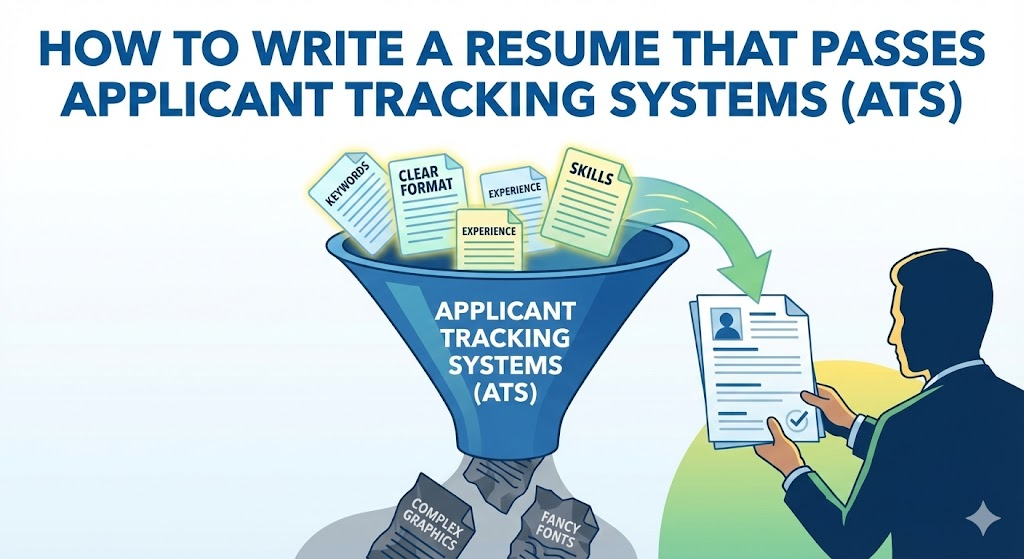
Many job seekers believe their resume is being read by a recruiter from the start. In reality, for many companies, the first reader is not human at all. It is software.
This software is known as an Applicant Tracking System, or ATS. Understanding how it works can make the difference between your resume being seen or quietly filtered out.
What Is an ATS and Why It Matters
An Applicant Tracking System is software used by employers to collect, scan, and organise job applications. It helps hiring teams manage large volumes of resumes efficiently, especially for popular roles.
In Singapore, ATS is widely used by:
- Large corporations
- Government-linked companies
- Recruitment agencies
- Multinational firms
The ATS does not judge how impressive you are as a person. It simply looks for structure, clarity, and relevance. If your resume cannot be read properly or does not match the job requirements, it may never reach a recruiter.
This is why ATS optimisation matters.
How ATS Reads Your Resume
ATS software scans resumes to extract key information such as:
- Job titles
- Skills
- Employment dates
- Education
- Keywords from the job description
It does not interpret design or creativity well. Instead, it prefers resumes that are simple, clear, and logically structured.
Think of ATS as a very literal reader. It looks for signals, not stories.
Use a Clean and Simple Resume Format
One of the most common mistakes is using overly designed resumes.
To make your resume ATS-friendly:
- Use a single-column layout
- Avoid tables, text boxes, and graphics
- Do not use icons for contact details
- Stick to standard fonts like Arial, Calibri, or Times New Roman
Your resume may look plain, but clarity is more important than visual flair at this stage.
Use Standard Section Headings
ATS systems are trained to recognise common resume sections.
Use clear headings such as:
- Professional Summary
- Work Experience
- Skills
- Education
- Certifications
Avoid creative alternatives like “My Journey” or “What I Bring”. They may confuse the system and cause important information to be missed.
Match Keywords from the Job Description
Keywords are one of the most important factors in ATS screening.
Carefully read the job description and identify:
- Required skills
- Tools and technologies
- Job titles
- Qualifications
Then, naturally include these keywords in your resume, especially in:
- Skills section
- Work experience bullet points
- Professional summary
For example, if the role mentions “data analysis using Excel and SQL”, do not write only “data work”. Be specific and aligned with the wording used.
Always be truthful. Keyword stuffing without real experience will backfire later in the interview stage.
Write Clear and Direct Bullet Points
ATS prefers straightforward language.
Good bullet points:
- Start with action verbs
- Focus on responsibilities and outcomes
- Avoid long paragraphs
For example:
- Managed monthly financial reports using Excel
- Coordinated project timelines with cross-functional teams
- Improved customer response time by 20 percent
Clear writing helps both the system and the human reader who comes later.
Be Careful with File Type and Naming
Most ATS platforms work best with:
- PDF files
- Word documents in .docx format
Unless stated otherwise, PDF is usually safe. Also, name your file professionally, such as:
- John_Tan_Resume.pdf
Avoid vague names like “final_resume_v3.pdf”.
Do Not Rely Fully on AI Tools
AI tools can help with wording and structure, but they should not replace your judgment.
If you use AI to assist:
- Review and personalise the content
- Ensure accuracy of experience
- Adjust language to reflect your real voice
Recruiters can often sense when a resume feels generic or disconnected from the role.
Remember the Human Reader Comes Next
Passing ATS is only the first step. Once your resume reaches a recruiter, it still needs to make sense and feel credible.
An ATS-optimised resume is not about gaming the system. It is about clarity, relevance, and alignment with the role you are applying for.
Final Thought
In today’s hiring process, writing a resume is both a technical and human exercise. By understanding how ATS works and presenting your experience clearly, you increase your chances of being seen and shortlisted.
A good resume does not shout. It communicates effectively to both machines and people.
Disclaimer: AI Large Language Model (LLM) was utilized to help preparing this article. There may be mistake in content created with AI-assistance.